
Ceiling leak: what to do right now, step by step
Keep people out from under a sagging or bulging ceiling, and turn off power to any light or fan the water is reaching. Then find and stop the source: an upstairs bathroom, a pipe, the roof, or an HVAC drain. Catch the water and start drying. Call 833-877-1717 for help finding an independent plumber, roofer or water damage provider.
RepairNowUSA editorial review · Last substantively reviewed October 13, 2026 · Review standards
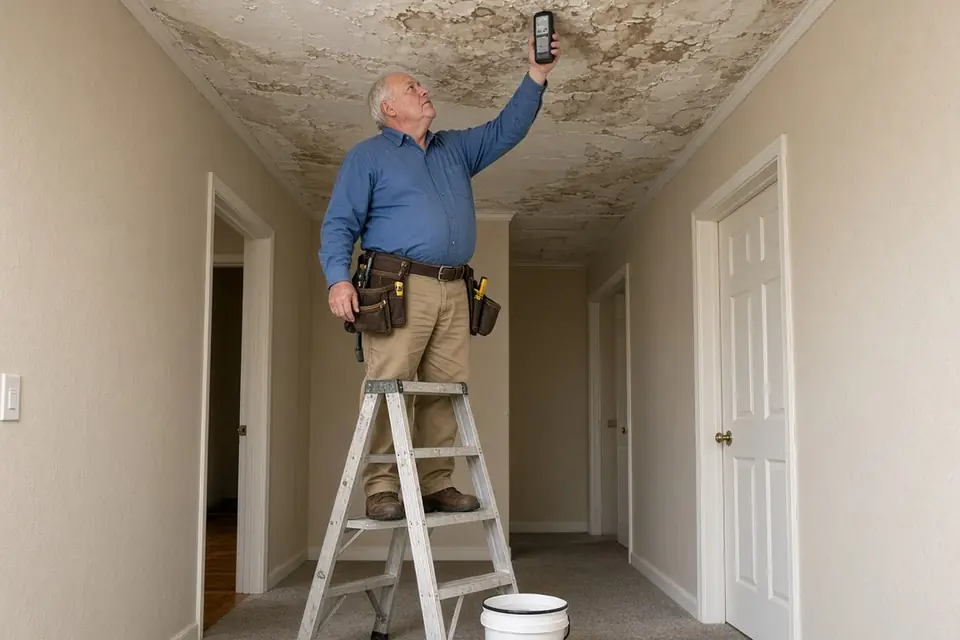
Step 1: make the room safe
- Sagging or bulging ceiling: keep everyone, including pets, out from under it. Saturated drywall is heavy and can drop without warning.
- Water through a light, fan or smoke detector: turn off that circuit at the breaker panel, and do not use the wall switch. If you are not sure which breaker it is, switch off the main from a dry spot.
- Water on the floor near outlets or cords: do not walk through it until the power is off.
Step 2: find the source
Where the water appears is not always where it starts. Water travels along joists and pipes before it drips. Work out what is directly above:
- A bathroom: a supply line, toilet seal, tub drain or failed shower grout or caulk. If the leak happens only when someone showers or flushes, that narrows it down.
- A kitchen or laundry room: a dishwasher, washing machine, ice maker line or sink drain.
- An attic: the roof, flashing around a chimney or vent, or an HVAC unit and its condensate drain pan. An attic air handler drain that backs up in summer is a very common cause.
- The roof during rain: if the leak starts and stops with the weather, it is likely the roof, a skylight, flashing or ice dams.
- Constant flow with no fixtures running: probably a supply pipe. Check whether the water meter is moving.
Step 3: stop the water
- Plumbing source: close the nearest fixture valve, or the main shutoff if you cannot find it. See how to shut off your water.
- HVAC source: turn the system off at the thermostat. Many air handlers have a float switch that should shut the system off when the pan fills; a pan full of water means the drain is blocked.
- Roof source: catch the water in the attic with buckets or a tarp-lined tray. Do not go on the roof in rain, wind or the dark. A tarp can be installed once the weather allows.
- Upstairs neighbor: in a condo or apartment, alert the unit above and building management right away.
Step 4: deal with a bulging ceiling
A bubble of water trapped above paint or drywall will keep spreading and may give way all at once. Restoration professionals often relieve it by making a small hole at the lowest point so the water drains into a bucket in a controlled way.
Only consider that if all of these are true: the bulge is small, the ceiling is not sagging broadly, there is no light fixture or wiring nearby, the power to that area is off, and you can stand to the side rather than directly under it. Otherwise, leave it alone, keep the room clear and get professional help.
Step 5: limit the damage and document it
- Move furniture, rugs and electronics out of the drip zone. Cover what you cannot move with plastic.
- Put buckets or a tarp under drips. A string or rope from the drip point into the bucket reduces splashing.
- Photograph the ceiling, the source and the damage before cleanup. Note the date and time.
- Run fans and a dehumidifier only where the electricity is safe.
- Do not paint over the stain until the ceiling is fully dry and the cause is fixed. Stains come back when the leak does.
Repair: the leak first, then the ceiling
Ceiling repairs are usually two or three jobs in order: fix the source (plumber, roofer or HVAC technician), dry the cavity above the ceiling, then repair or replace the drywall and paint. Wet insulation above the ceiling often needs removal. Drying within about 24–48 hours helps prevent mold.
When you call 833-877-1717, say what you think the source is. RepairNowUSA can look for a participating independent provider for the leak, the drying, or the ceiling repair.
How RepairNowUSA can help
Call 833-877-1717 and describe what is happening and the property ZIP code. RepairNowUSA looks for a participating independent provider for that kind of work in your area and connects you if one is available. The provider confirms timing, scope and price with you and does the work. Availability and response times vary and are not guaranteed.
Call 833-877-1717Common questions
Should I poke a hole in a bulging ceiling?
Only if the bulge is small, there is no light or wiring nearby, the power is off, and you can stand to the side. Otherwise keep the room clear and get help. A broadly sagging ceiling can collapse and should be left to a professional.
Why is my ceiling leaking when it is not raining?
Usually plumbing: a supply line, toilet seal, shower or tub drain above. In summer, a clogged air conditioner condensate drain in the attic is also very common.
Is a ceiling leak an emergency?
It is when water is actively flowing, the ceiling is sagging, or water is reaching light fixtures or wiring. A small dry stain that is not growing can usually be scheduled, but find the cause soon.
Will insurance cover ceiling damage from a leak?
Sudden water damage is often covered; long-term leaks, wear and lack of maintenance often are not. Your policy and adjuster decide. Photos and quick action to stop further damage help a claim.
Can I call RepairNowUSA at night?
Yes. You can call 833-877-1717 at any time, including nights, weekends and holidays. Whether an independent provider can come out right away depends on your ZIP code, the time and provider capacity, so availability is not guaranteed.
Authoritative references
These public sources give general safety context. They do not replace an on-site evaluation, and RepairNowUSA does not perform the work.