
Stop the source
Close the main water valve, or the valve for the leaking fixture or appliance.
Water spreading through floors, walls or ceilings? Water damage repair starts with restoration: removing standing water and drying the building before mold and rot set in. Damaged drywall, flooring and ceilings are repaired after that. Stop the source, stay clear of wet electrical items, then call 833-877-1717. RepairNowUSA connects the request. An independent restoration company does the work.
If the water is still coming in, start with the source: burst pipe, roof leak or appliance leak. Sewage or flood water is a different, more hazardous category: see sewage backup or flood cleanup.
RepairNowUSA editorial review · Last substantively reviewed October 14, 2026 · Review standards
Close the main water valve, or the valve for the leaking fixture or appliance.
If the panel is dry and safe to reach, switch off circuits for the wet rooms. Never stand in water to do it.
Lift furniture onto blocks or foil, move rugs, electronics and documents, and photograph everything before it is moved or thrown out.
Clean water from a supply line is the least hazardous. Water from a dishwasher, washer or toilet overflow can carry contaminants. Sewage and outside flood water are treated as contaminated: avoid contact, keep children and pets away, and leave the cleanup to professionals.
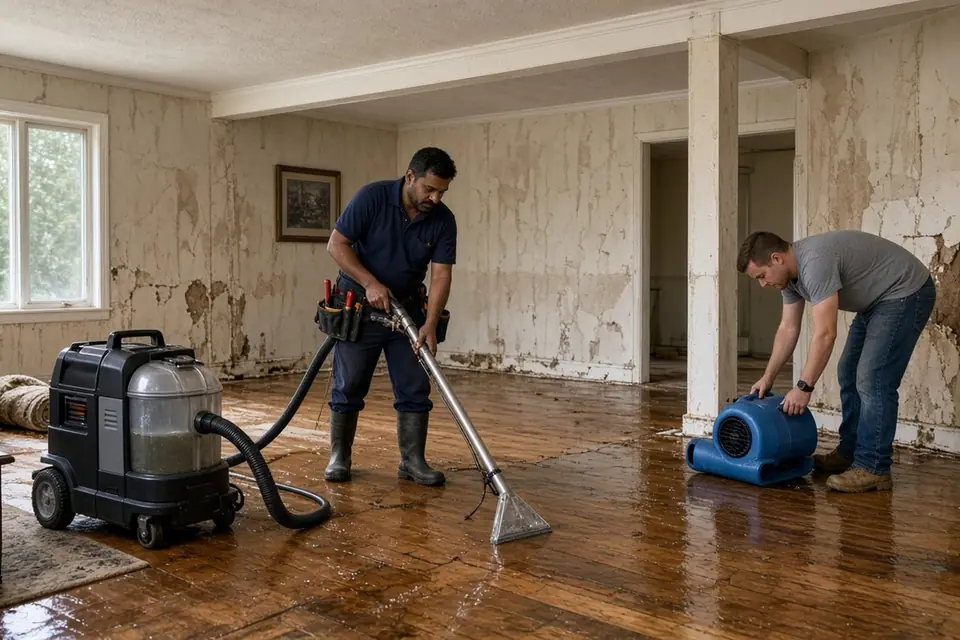
Pumping and vacuuming standing water from floors, carpet and basements. See water extraction.
Fans, dehumidifiers and moisture readings until walls and subfloors are actually dry. See structural drying.
Soaked drywall, insulation, pad and some flooring may need to come out so the structure can dry.
Water from above can collect in a ceiling. See ceiling water damage.
Removes water, dries and monitors moisture, and documents the loss. Rebuilding drywall or flooring may be a later, separate step.
Fixes whatever let the water in. If the source is still active, say so on the call so both needs can be routed.
More on each step: water extraction, structural drying, water-damaged drywall repair and ceiling water damage. Fixing the source is a separate job: a burst pipe, slab leak, roof leak or appliance leak needs a plumber, roofer or appliance technician.
Stains, bubbling or peeling paint, soft or sagging drywall, and a ceiling that feels damp or bulges.
Cupping or buckling hardwood, lifting vinyl, loose tiles, or carpet that stays damp or smells.
A musty odor that does not go away, or rising humidity in one room, can mean water is trapped inside walls or under floors.
A water bill that jumps, or a meter that moves when nothing is running, points to a hidden leak.
RepairNowUSA does not set prices. The independent provider gives the estimate. Ask for a written scope that separates drying, removal and rebuilding.
Standard homeowners policies often cover sudden, accidental water damage, such as a burst pipe, but often exclude gradual leaks and outside flooding. Flood damage generally needs a separate flood policy, such as one from the National Flood Insurance Program. Your policy decides, so call your insurer or agent early, photograph everything before it is moved, keep damaged items until the adjuster sees them, and save every receipt.
RepairNowUSA is a referral and connection service. Provider availability and response times vary by location, time and demand, and are not guaranteed. Before you approve work, ask what was found, the price, the timing and what is not included.
Call 833-877-1717Quickly. U.S. EPA guidance is to dry wet materials within 24 to 48 hours to help prevent mold. The sooner drying starts, the more can usually be saved.
Restoration removes the water and dries the building so damage stops spreading. Repair is the rebuilding afterward: drywall, ceilings, flooring and finishes. Many jobs need both, sometimes from different companies.
It depends on how large the wet area is, the type of water, how long it sat and what has to be replaced. The independent provider gives the estimate after an inspection. RepairNowUSA does not set prices.
Drying often takes several days and is confirmed with moisture readings. Rebuilding can take longer, depending on the materials and permits.
Yes. You can call 833-877-1717 at any time, including nights, weekends and holidays. Whether an independent provider can come out right away depends on your ZIP code, the time and provider capacity, so availability is not guaranteed.
For a small spill on a hard floor, maybe. Water that has soaked carpet pad, drywall or subfloor usually needs professional extraction, dehumidifiers and moisture readings to confirm it is dry inside.
It depends on the water source, how long it sat, and the materials. Clean-water damage caught early is often dried in place. Sewage-contaminated porous materials are usually removed.
Often for sudden, accidental damage such as a burst pipe, but usually not gradual leaks or outside flooding, which generally needs a separate flood policy. RepairNowUSA cannot answer for your policy. Photograph the damage, keep receipts, and contact your insurer or agent early.
No. RepairNowUSA connects you with an independent restoration provider, who sets the scope, schedule and price.
These public sources give general safety context. They do not replace an on-site evaluation, and RepairNowUSA does not perform the work.