
Commercial property repair help for operating businesses
A property problem becomes a business problem when it interrupts customers, employees, inventory, access, utilities, safety, or normal operations. RN helps start with the operational impact and the observable failure. RepairNowUSA takes the call and connects a provider. The provider does the work.
Report business impact
Say what function is unavailable: restrooms, cooling, refrigeration, power, entry, water, roof protection, lighting, security, or another building function. Note whether the business is closed, partially operating, or at risk of additional loss.
Urgent commercial failures
Active water, electrical hazards, refrigeration loss, unsecured storefronts, roof openings, sewage, loss of heat/cooling in critical conditions, and building-wide utility failures may need immediate classification and multiple scopes.
Scheduled commercial repair
Planned work should include operating hours, preferred service window, customer/employee restrictions, loading/access rules, landlord or owner approval, and any vendor onboarding or insurance requirements.
Common commercial systems
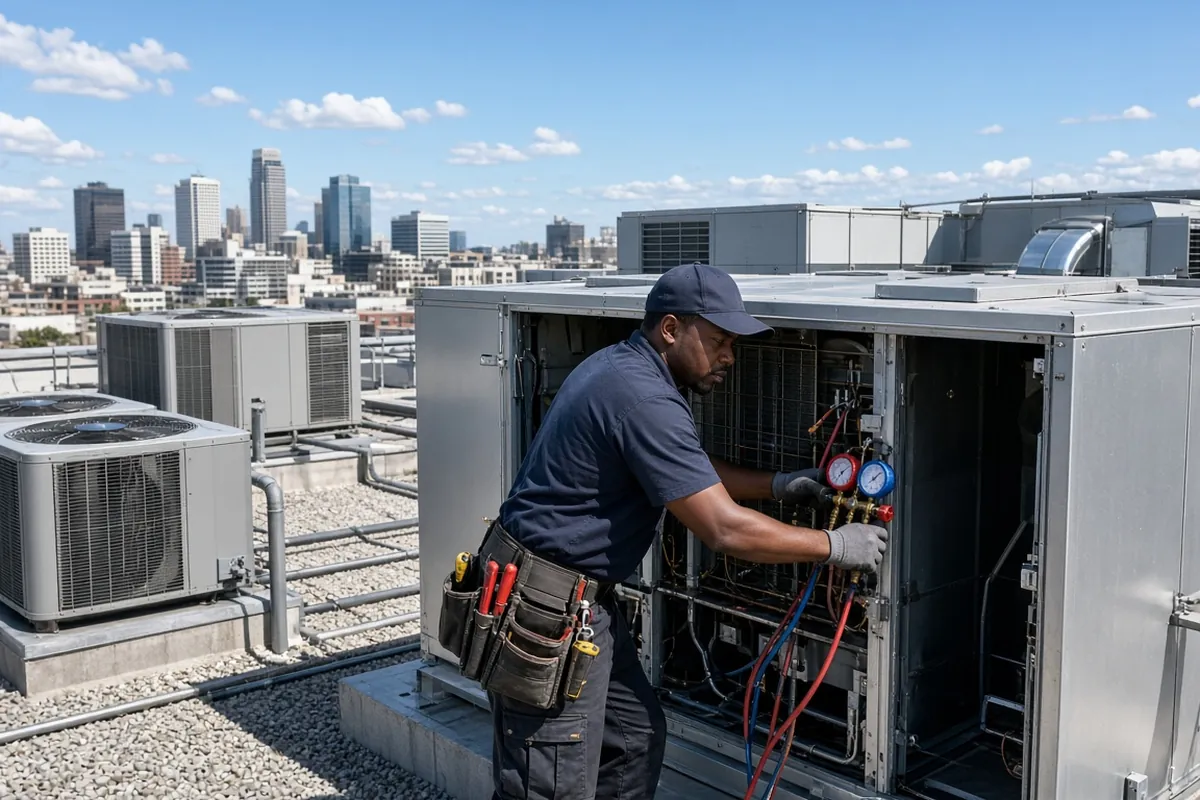
Commercial HVAC and rooftop units, plumbing and drains, electrical and lighting, roofs, water damage, doors and access control, refrigeration, generators, glass/storefronts, and general facility repairs can all have different provider requirements.
Protect the authorization chain
Identify who can approve diagnosis, temporary stabilization, permanent repair, change orders and additional trades. Tell the provider what must be documented before work can proceed.
Independent-provider responsibility
The provider determines diagnosis, pricing, scope, scheduling, licensing/credentials, permits and repair outcome. RN provides intake and connection support when participating coverage is available.
Useful repair paths
- Commercial Repair Desk
- Commercial emergency repair
- Commercial refrigeration
- Storefront glass
- Commercial electrical
- Request Service Online
RepairNowUSA is a referral and connection service. Availability varies by trade and ZIP code. Independent providers determine diagnosis, pricing, scope, scheduling and the repair transaction.
Protect operations while repair is arranged
Use safe temporary measures that preserve customers, employees, inventory and access without bypassing safety systems. Move temperature-sensitive inventory when required, isolate wet areas, restrict unsafe entrances and communicate closures or route changes to staff.
Distinguish landlord and tenant responsibility
Commercial leases can divide responsibility for roofs, HVAC, plumbing, electrical, storefronts, doors and interior finishes. Clarify who can authorize the work before the provider begins permanent repair.
Emergency work can create follow-on work
A plumber may stop the leak while restoration dries the building; a board-up may secure the storefront before glass arrives; an electrician may restore a circuit but identify damaged equipment. Plan for the incident, not just the first vendor visit.
Prepare for off-hours service
Provide alarm instructions, lockbox or key control, contact chain, parking/loading access, noise restrictions, shutdown authorization and whether security or management must be present. These details can determine whether after-hours work succeeds.
Capture business-loss facts without turning RN into a claims service
Note closure time, affected operations, product loss and temporary mitigation for your own records and insurance process. RN does not determine coverage, business-interruption loss or reimbursement.
Questions for this audience
Can I call if the business is still open?
Yes. Explain whether operations are normal, restricted or stopped and what area/system is affected.
What if a landlord must approve the repair?
State that during intake and identify who can authorize diagnostic or permanent work.
Can after-hours work be requested?
Yes, but actual provider availability varies by trade, ZIP and time.
Does RN handle insurance claims?
No. RN does not determine insurance coverage or business-interruption reimbursement.
Protect operations while the repair is being organized
For a business, the practical question is often not only what failed but what the failure is stopping. Tell RN whether customers cannot enter, refrigeration temperatures are rising, restrooms are unavailable, water is spreading, a roof leak is affecting inventory, or a building system has taken an area out of service.
Separate temporary stabilization from permanent repair. Board-up, water extraction, temporary cooling, or an electrical shutdown may reduce immediate risk, while permanent glazing, roofing, equipment, or wiring work follows after diagnosis and authorization.
If the site has restricted hours, landlord approval, security rules, loading-dock access, or a manager who must authorize work, include that at intake. Operational details can be just as important as the trade itself.
- Business operating impact.
- Customer/employee safety restrictions.
- Site access and authorized decision-maker.
- Temporary steps already taken and what remains active.
Plan for the business interruption as well as the repair
A repair decision may require temporary operating changes: closing an entrance, moving inventory, isolating a restroom, shutting down equipment, or keeping customers away from a wet or unsafe area. Tell the provider what cannot be interrupted and what temporary workaround is acceptable.
For leased spaces, identify when landlord or property-management approval is required before permanent work can proceed. That distinction can prevent a provider from arriving ready to work but unable to receive authorization.
- Critical business function affected
- Temporary operating workaround
- Landlord/property approval if required
- Manager authorized to approve repair
Start with what is happening at the property
Call with the ZIP code, property type, observable problem, urgency, access requirements and who can authorize work. RN can use those facts to evaluate an available participating connection path.
Call 833-877-1717RepairNowUSA content on this page follows the Editorial Standards, including role clarity, source restraint, and correction practices.