
Sewage backup guide: causes, safety and cleanup
Stop using all water in the building, keep people and pets away from the wastewater, and do not touch it without gloves and boots. Sewage is treated as the most contaminated category of water, so porous materials it soaks usually have to be removed. Call 833-877-1717 if you need an independent sewer or cleanup provider.
RepairNowUSA editorial review · Last substantively reviewed October 13, 2026 · Review standards
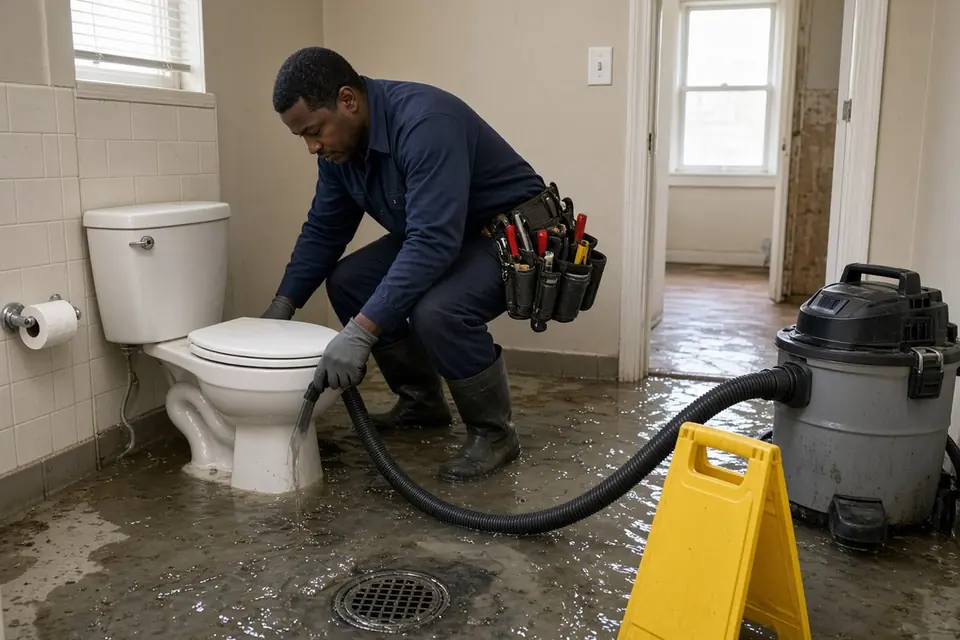
Do these three things right now
- Stop using water everywhere. Do not flush, shower, run the dishwasher or washing machine. Tell everyone in the building, including other units if you share a sewer line.
- Keep people and pets out. This matters most for young children, older adults, and anyone pregnant, ill or with a weakened immune system.
- Watch the electricity. If wastewater is touching outlets, cords, a furnace, a water heater or the panel, stay out of it. Turn off power only if you can reach the panel from a dry floor.
Main line or a single clog?
The pattern tells you a lot:
- Only one fixture is slow or backing up: probably a clog in that branch line. It is less urgent and the rest of the house may still be usable.
- The lowest drain (basement floor drain, lowest tub or shower) fills when you flush or run water elsewhere: classic sign of a main sewer line blockage.
- Gurgling toilets and several slow drains at once: usually the main line or a venting problem.
- Backup during heavy rain: the municipal sewer may be overloaded. Many homes in older systems need a backwater valve.
Common causes
- Tree roots growing into joints in older clay or cast-iron sewer lines.
- Grease, wipes (including those labeled "flushable"), and paper products building up in the line.
- A sagging ("bellied") or collapsed section of pipe.
- Municipal sewer surcharge during storms.
- A failed septic system or a full septic tank, on properties not connected to a city sewer.
A sewer camera inspection is the usual way to find the cause after the line is cleared.
Protecting yourself if you have to go near it
- Wear rubber boots, waterproof gloves and eye protection. Use an N95 mask if you are disturbing dried material.
- Do not eat, drink or touch your face in the affected area, and wash hands thoroughly afterward.
- Keep the area ventilated, but do not use household fans in a way that spreads contamination to clean rooms.
- Wash clothing worn during cleanup separately in hot water.
- Get medical advice for any cut or wound that touches sewage.
What sewage cleanup really involves
The IICRC water damage standard puts sewage in Category 3, the most contaminated class of water. That shapes the cleanup:
- Standing wastewater is pumped or extracted, and solids are removed.
- Porous materials that the sewage soaked, such as carpet and pad, drywall near the floor, insulation and particleboard furniture, are usually removed and discarded rather than cleaned.
- Hard surfaces are cleaned and then disinfected.
- The structure is dried and moisture is measured before rebuilding.
Small backups confined to a tile floor are sometimes handled by owners using CDC cleaning and disinfecting guidance. Large areas, carpet or drywall contact, and any backup in a home with vulnerable occupants are usually work for a professional.
Preventing the next backup
- Never flush wipes, paper towels, grease or hygiene products.
- Ask about a backwater valve if your basement floor drain sits below street sewer level.
- Schedule a camera inspection for older homes with large trees near the sewer line.
- For septic systems, follow the pumping schedule your septic professional recommends.
How RepairNowUSA can help
Call 833-877-1717 and describe what is happening and the property ZIP code. RepairNowUSA looks for a participating independent provider for that kind of work in your area and connects you if one is available. The provider confirms timing, scope and price with you and does the work. Availability and response times vary and are not guaranteed.
Call 833-877-1717Common questions
Is it safe to stay in the house during a sewage backup?
Often yes, if the contamination is confined to an area you can close off, the power is safe and nobody is in a high-risk group. Large backups, sewage in living areas, or vulnerable occupants can make it better to stay elsewhere until cleanup is done.
Can I clean up sewage myself?
A small amount on a hard, non-porous floor can be cleaned with protective gear and disinfectant. Sewage that has soaked carpet, drywall or insulation is usually professional work, because those materials typically have to be removed.
Does insurance cover a sewer backup?
Many standard homeowners policies exclude sewer and drain backup unless you added a specific endorsement. Check your policy, and document the damage with photos before cleanup.
Who is responsible for the sewer line?
Owners are usually responsible for the lateral line from the building to the city main, though some cities share responsibility for the part under the street. Your local public works office can tell you where your responsibility ends.
Can I call any time?
Yes. You can call 833-877-1717 at any time, including nights, weekends and holidays. Whether an independent provider can come out right away depends on your ZIP code, the time and provider capacity, so availability is not guaranteed.
Authoritative references
These public sources give general safety context. They do not replace an on-site evaluation, and RepairNowUSA does not perform the work.