
Fix the leak first
Patching wet drywall without stopping the source just repeats the damage. Shut off the water or call for the plumbing or roof repair first.
Wet drywall loses strength and can grow mold within 24 to 48 hours. The leak must be fixed and the wall dried before patching. Call 833-877-1717. RepairNowUSA connects the request. An independent provider does the work.
Drying first: structural drying.
RepairNowUSA editorial review · Last substantively reviewed October 14, 2026 · Review standards
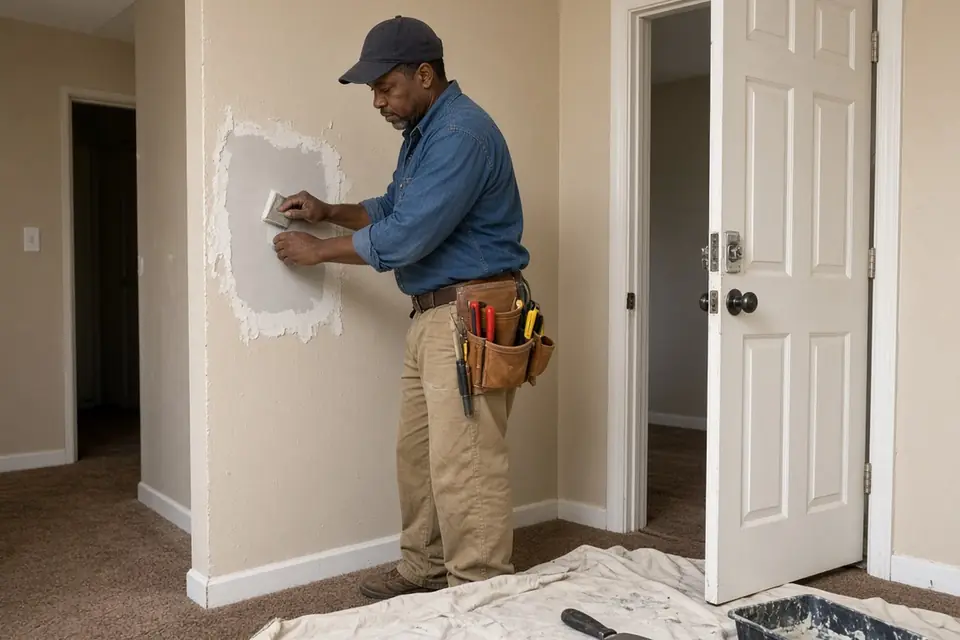
Patching wet drywall without stopping the source just repeats the damage. Shut off the water or call for the plumbing or roof repair first.
Run fans and a dehumidifier if it is safe to use electricity in that area. EPA advises drying water-damaged materials within 24 to 48 hours to prevent mold.
Paint over a wet or stained wall usually bleeds through and can trap moisture. Wait until the wall is dry, then seal before painting.
Fix any leak before repairing drywall. Wet drywall can grow mold. Homes built before 1978 may have lead paint; disturbing it requires lead-safe practices.
Supply line, drain or shower valve leaks soak drywall from behind. Bubbling paint, soft spots and baseboard stains are common signs.
Roof leaks and upstairs bathrooms stain and sag ceilings. A sagging ceiling holding water is a safety risk; keep people out from under it. See ceiling water damage restoration.
After a flood, drywall wicks water upward. Contaminated flood water means wet drywall and insulation usually come out.
Washers, dishwashers, refrigerators and water heaters can soak walls in kitchens and laundry rooms. See appliance leak water damage.
Homes built before 1978 may have lead-based paint. Cutting or sanding it requires lead-safe work practices, so tell the provider the age of the building.
RepairNowUSA is a referral and connection service. Provider availability and response times vary by location, time and demand, and are not guaranteed. Before you approve work, ask what was found, the price, the timing and what is not included.
Call 833-877-1717Usually the wet section plus a margin. After flooding, walls are often cut a foot or more above the highest wet point, based on moisture readings.
Sometimes, if it was wet from clean water, dried quickly and is still firm. Drywall that is soft, crumbling, moldy or soaked with dirty water is usually replaced.
Wet fiberglass or cellulose insulation usually does, because it holds water and dries slowly inside the wall.
Drying often takes a few days. Hanging, taping and finishing then takes a few more days because joint compound needs time to dry between coats.
Yes. You can call 833-877-1717 at any time, including nights, weekends and holidays. Whether an independent provider can come out right away depends on your ZIP code, the time and provider capacity, so availability is not guaranteed.
These public sources give general safety context. They do not replace an on-site evaluation, and RepairNowUSA does not perform the work.