
Burst pipe: what to do in the first 30 minutes
Shut off the main water valve first, then keep everyone away from water near outlets, cords or the electrical panel. Open a low faucet to drain the lines, move valuables out of the water, and photograph the damage before cleanup. If you need an independent plumber or water-removal provider, call 833-877-1717.
RepairNowUSA editorial review · Last substantively reviewed October 13, 2026 · Review standards
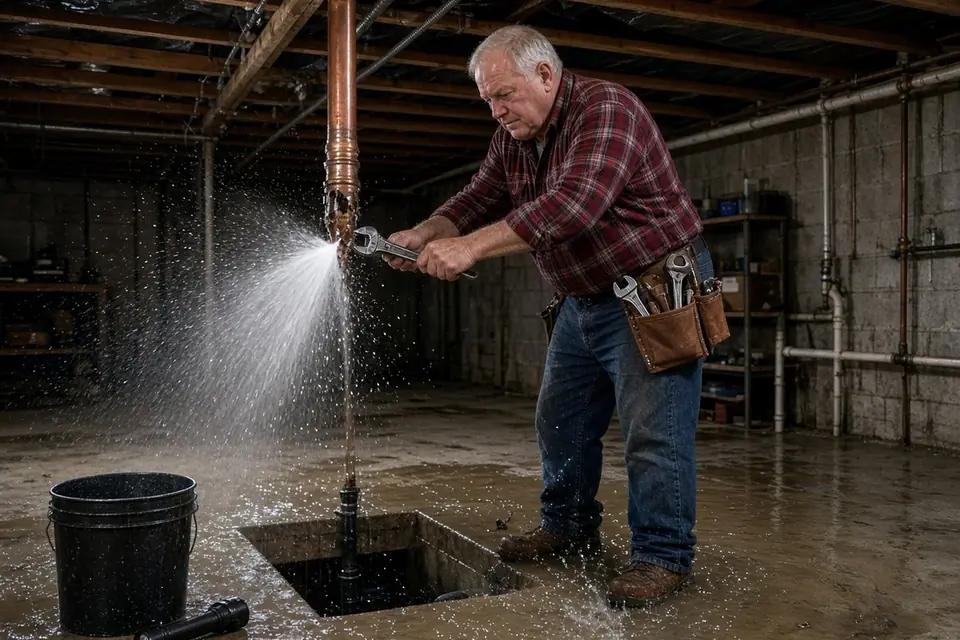
Minutes 0–5: stop the water
Every other step depends on this one. Go straight to the main shutoff valve. In most homes it is where the water line comes through the foundation: in a basement, crawl space, garage, utility closet or behind an access panel near the water heater. In warm climates it is often outside, near the meter or a hose bib on the front wall.
- Round wheel handle (gate valve): turn it clockwise until it stops. Do not force a seized valve hard enough to snap the stem.
- Lever handle (ball valve): turn it a quarter turn so the lever sits across the pipe, not along it.
- Can't find it or it won't move? The street-side valve in the meter box can be closed with a meter key. Many water utilities will shut service at the curb in an emergency; their number is on your bill.
If the break is on a single fixture line (under a sink, behind a toilet, to a washer or ice maker), the small fixture stop right there may be enough. If you are not sure which line failed, close the main.
Minutes 5–10: make the area electrically safe
Water and electricity are the most serious danger in a burst pipe, more than the water itself.
- Do not walk into standing water that is touching outlets, power strips, extension cords, appliances or the electrical panel.
- If you can reach the panel while standing on a dry floor with dry hands, switch off the breakers for the flooded area, or the main breaker. If reaching the panel means crossing water, stay out and ask the electric utility or fire department for help.
- If water is coming through a ceiling light or fan, turn off that circuit at the panel and do not touch the wall switch.
Keep children and pets out of the area until the power question is settled.
Minutes 10–20: drain the lines and protect the water heater
- Open the lowest faucet in the building, such as a basement sink or an outdoor spigot, and then a high one, such as an upstairs tub. This empties the pipes so less water escapes from the break.
- Flush toilets once to empty their tanks if the break is near them.
- If the main will be off for more than a short time, set a gas water heater to "pilot" or "vacation", or switch off the breaker for an electric one. This protects the burner and elements if the tank level changes.
- If the pipe froze and split, open the cabinet doors and warm the area gently. Never use an open flame, propane torch or heat gun on a frozen pipe.
Minutes 20–30: limit the damage and document it
- Move electronics, documents, rugs and furniture out of the wet area. Put foil or plastic under furniture legs that have to stay.
- Mop or shop-vac standing water only where the power is confirmed off. Keep cords off wet floors.
- Take photos and video of the broken pipe, the water level, wet walls and ceilings, and damaged belongings before cleanup. Note the time you found the leak.
- Keep the failed section of pipe or fitting if a plumber removes it. Insurers sometimes ask to see it.
- Call your insurance company or agent to start a claim and ask what they need from you.
What happens after the first 30 minutes
A burst pipe usually means two separate jobs: the plumbing repair and drying the building. A plumber replaces the failed section and checks nearby pipes, especially when cold caused the break. A water damage restoration provider then measures moisture inside walls, floors and cabinets and sets up drying equipment.
Speed matters for the second job. The EPA notes that drying wet materials within 24–48 hours helps prevent mold growth. Visible water is only part of the problem: drywall, insulation and subfloor can stay wet long after the surface looks dry.
When you call 833-877-1717, say whether you need the pipe repaired, the water removed, or both. RepairNowUSA can look for participating independent providers for each.
Why pipes burst, and how to keep it from happening again
- Freezing: ice expands and raises pressure between the ice plug and a closed faucet. The split often appears away from the frozen spot. Pipes in exterior walls, attics, crawl spaces and garages are most at risk.
- High water pressure: household pressure well above 80 psi strains fittings and supply lines. A pressure-reducing valve can fail without warning.
- Aging materials: corroded galvanized steel, failing polybutylene and old braided supply lines are common sources.
- Prevention: insulate exposed pipes, keep heat on when away (many guides suggest 55°F or higher), let at-risk faucets drip in a hard freeze, and consider a leak sensor or automatic shutoff valve.
How RepairNowUSA can help
Call 833-877-1717 and describe what is happening and the property ZIP code. RepairNowUSA looks for a participating independent provider for that kind of work in your area and connects you if one is available. The provider confirms timing, scope and price with you and does the work. Availability and response times vary and are not guaranteed.
Call 833-877-1717Common questions
Should I turn off the water heater when a pipe bursts?
If the main water will be off for more than a short time, it is a reasonable precaution. Set a gas unit to pilot or vacation, or switch off the breaker for an electric one. Turn it back on only after the system is refilled and running water comes from a hot faucet.
Is a burst pipe covered by homeowners insurance?
Many policies cover sudden and accidental water damage, but they often exclude gradual leaks and may limit coverage for freeze damage in a home left unheated. Your policy and adjuster decide coverage. Photos, the time of discovery and receipts for emergency work help with a claim.
Can I use the water in the rest of the house after shutting off the main?
No. Closing the main shuts off water to the whole building. If the break is on a line with its own shutoff, you can close that valve, reopen the main and use the rest of the house until the repair.
How do I know if a pipe burst inside a wall?
Signs include a running sound when all fixtures are off, a water meter that keeps moving, spreading stains, bubbling paint, or warm or wet spots on walls and floors. Shut off the main and have a plumber locate the leak before opening walls.
Can I call at night or on a weekend?
Yes. You can call 833-877-1717 at any time, including nights, weekends and holidays. Whether an independent provider can come out right away depends on your ZIP code, the time and provider capacity, so availability is not guaranteed.
Authoritative references
These public sources give general safety context. They do not replace an on-site evaluation, and RepairNowUSA does not perform the work.