
Apartment building emergencies: a multifamily response guide
In apartment buildings, one failure often affects many households: water travels between units, a boiler serves the whole building, a sewer stack backs up into the lowest units. Find the source fast, protect the units below, communicate with residents, and get the right provider moving. Call 833-877-1717 to request an independent provider.
RepairNowUSA editorial review · Last substantively reviewed October 13, 2026 · Review standards
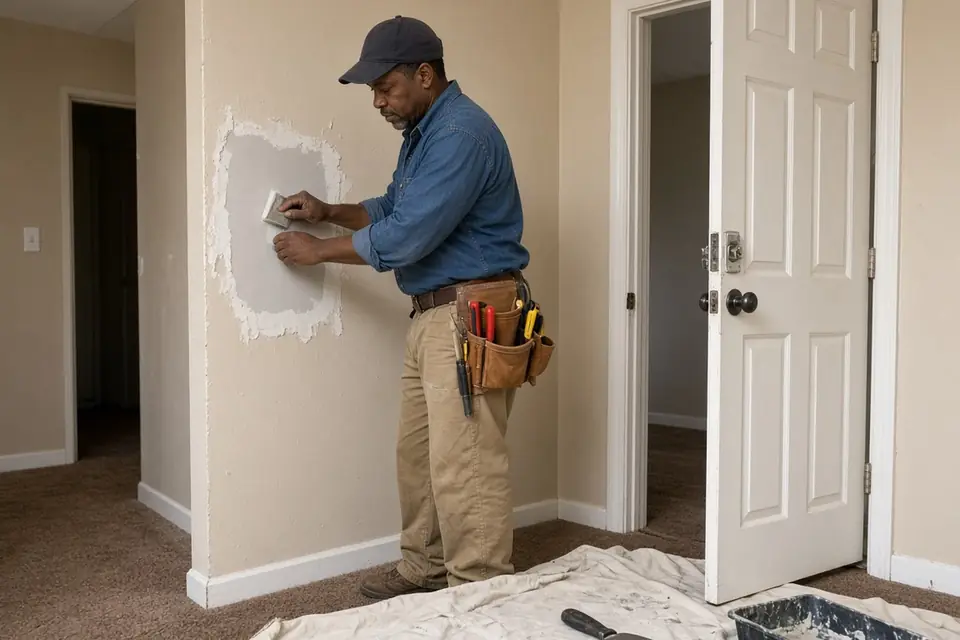
Water traveling between units
- Find the source unit. It is usually directly above, but water can travel sideways along floors and pipes. Check the unit above and next to the leak.
- Get into the source unit quickly, following your lease and local law on emergency entry.
- Close the unit's water shutoff if it has one, or the riser valve or building main if not. Notify all affected residents before shutting off a riser.
- Check every unit below the source down to the lowest level.
- Photograph each affected unit and start drying the same day.
Sewer stack backups
- The lowest units on a stack get the backup when the main or stack is blocked.
- Notify residents on that stack to stop using water until it is cleared.
- Treat sewage-affected areas as contaminated; porous materials usually need removal.
- After clearing, a camera inspection can show whether roots, grease or a broken pipe caused it.
Building-wide heat, hot water or water loss
- Check boiler or central plant alarms, fuel, power and water levels if you are trained on the equipment.
- Tell residents what is happening and when you expect an update.
- In cold weather, protect vacant units and common areas from freezing.
- Plan for vulnerable residents: older adults, people with medical needs and families with infants.
- Local codes often set minimum heat and hot water requirements for rental housing.
Fire protection and elevators
- Fire alarm or sprinkler out of service: notify the fire department or monitoring company as your local rules require, and arrange a fire watch if required. Use a licensed fire protection contractor.
- Sprinkler discharge: call 911 if there is a fire. Otherwise, only trained staff should close a sprinkler control valve, following your procedures.
- Someone trapped in an elevator: call the elevator company's emergency line. Call 911 if the person is in distress. Do not try to force doors open.
Communicating with residents
- Post notices in common areas and send texts or emails to affected residents.
- Say what happened, what residents should do (for example, stop using water), and when the next update will come.
- Keep a contact list for after-hours staff, providers and the owner.
- Keep a log of every report, action and provider visit.
Getting providers
Multifamily emergencies often need several trades. When you call 833-877-1717, give the building type, number of affected units, the system involved, access arrangements and who approves costs. RepairNowUSA looks for participating independent providers; each provider confirms timing and price with you.
How RepairNowUSA can help
Call 833-877-1717 and describe what is happening and the property ZIP code. RepairNowUSA looks for a participating independent provider for that kind of work in your area and connects you if one is available. The provider confirms timing, scope and price with you and does the work. Availability and response times vary and are not guaranteed.
Call 833-877-1717Common questions
How do I find the source of a leak in an apartment building?
Start with the unit directly above, then check neighboring units and shared walls. Water can travel along floors and pipes before it shows up. Moisture meters and thermal cameras help providers trace it.
Who pays for water damage that spreads between units?
It depends on the cause, the leases, condo bylaws if applicable, and insurance policies. Document everything and notify insurers promptly.
What should I do if the building boiler fails in winter?
Get a heating provider moving, notify residents, protect pipes in vacant and common areas, and check on vulnerable residents. Local codes often set minimum heat requirements.
Can I shut off water to the whole building?
Sometimes it is the only way to stop a leak, but notify residents first when you can and keep the shutoff as short as possible.
Can I call any time?
Yes. You can call 833-877-1717 at any time, including nights, weekends and holidays. Whether an independent provider can come out right away depends on your ZIP code, the time and provider capacity, so availability is not guaranteed.
Authoritative references
These public sources give general safety context. They do not replace an on-site evaluation, and RepairNowUSA does not perform the work.