
Limit access
Close off affected rooms and post signs. Keep occupants out of spaces with visible growth or a strong musty odor.
Mold in offices, schools, healthcare and multifamily buildings affects occupants and can require containment and clearance testing. Fix the moisture source and call 833-877-1717. RepairNowUSA connects the request. An independent provider does the work.
Residential: mold remediation.
RepairNowUSA editorial review · Last substantively reviewed October 14, 2026 · Review standards
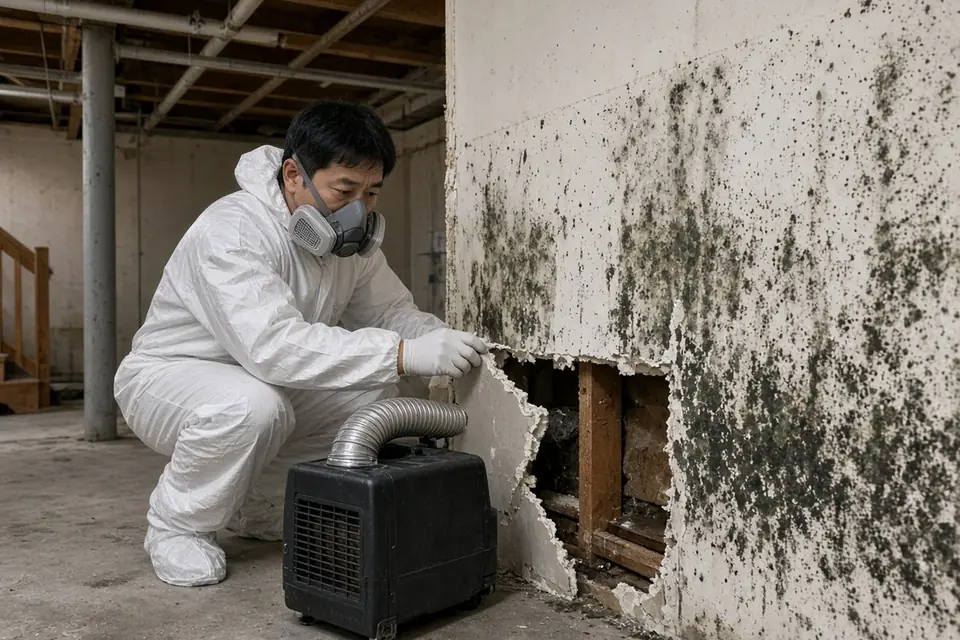
Close off affected rooms and post signs. Keep occupants out of spaces with visible growth or a strong musty odor.
Find and stop the leak, condensation or humidity problem. Remediation does not last if the source keeps feeding the mold.
Tell building management, the property owner and, where appropriate, tenants or staff. Check your lease, policies and any local notification rules.
Mold can trigger asthma and allergies. EPA guidance recommends professional remediation for large areas or HVAC contamination. Some jurisdictions require licensed remediators.
Burst pipes, sprinkler discharge and roof leaks can leave hidden moisture inside walls, ceiling tiles and under flooring.
Drain pans, coils, ductwork and air handlers can grow mold and spread spores through the building. HVAC contamination needs special handling.
Stained or sagging acoustic tiles often hide wet insulation and decking above. See commercial roof leak repair.
Basements, storage rooms, locker rooms and buildings shut down for long periods can grow mold without a single leak.
After-hours and phased work can reduce disruption. Some jurisdictions and building types have specific licensing, notification or clearance rules, so confirm them with the provider and your compliance team.
RepairNowUSA is a referral and connection service. Provider availability and response times vary by location, time and demand, and are not guaranteed. Before you approve work, ask what was found, the price, the timing and what is not included.
Call 833-877-1717Requirements vary by jurisdiction and building type. Many commercial projects use independent post-remediation verification so the remediator is not grading its own work.
Often, with containment, negative air pressure and scheduling around occupants. Healthcare, schools and other sensitive settings may need stricter measures.
If the HVAC serves the affected area or is contaminated itself, it may need to be isolated or shut down during the work. The provider will advise based on the layout.
It depends on the lease and who controls the space and the systems. Check the lease and involve the property owner early.
RepairNowUSA cannot answer for your policy. Many policies limit or exclude mold unless it results from a covered water loss. Document the event and contact your broker or insurer.
Yes. You can call 833-877-1717 at any time, including nights, weekends and holidays. Whether an independent provider can come out right away depends on your ZIP code, the time and provider capacity, so availability is not guaranteed.
These public sources give general safety context. They do not replace an on-site evaluation, and RepairNowUSA does not perform the work.