
Stop the moisture
Mold needs water. Fix the leak, stop the seepage or lower the humidity first, or the mold will come back after cleanup.
Mold grows on materials that stay wet. Restoration removes affected materials safely, fixes the moisture and restores the area. Call 833-877-1717. RepairNowUSA connects the request. An independent provider does the work.
General mold: mold remediation.
RepairNowUSA editorial review · Last substantively reviewed October 14, 2026 · Review standards
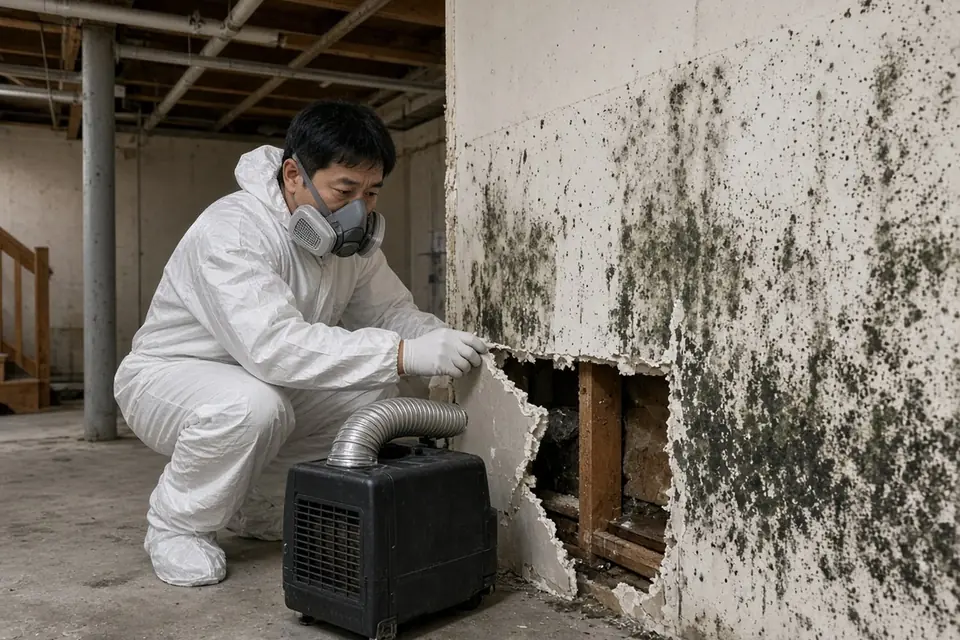
Mold needs water. Fix the leak, stop the seepage or lower the humidity first, or the mold will come back after cleanup.
Scraping, sanding or dry brushing releases spores into the air and spreads them to other rooms.
Keep the door shut and keep people out, especially anyone with asthma, allergies or a weakened immune system.
Mold can trigger asthma and allergies. EPA suggests professional help for areas larger than about 10 square feet.
Slow leaks inside walls, under sinks and behind appliances can feed mold for weeks before anyone sees it. Stains and musty odor are common early signs.
Flooded drywall, insulation and flooring stay wet inside. EPA advises drying water-damaged areas within 24 to 48 hours to prevent mold growth.
High humidity and groundwater make lower levels prone to mold on joists, walls and stored items. See crawl space water removal.
Roof leaks and poor ventilation can grow mold on roof sheathing. The roof problem needs fixing too: see roof leak repair.
EPA notes that if mold covers more than about 10 square feet, or there was a lot of water damage, its guide for larger remediation applies and an experienced contractor is advisable. Some states license mold remediators, so ask about licensing where you live.
RepairNowUSA is a referral and connection service. Provider availability and response times vary by location, time and demand, and are not guaranteed. Before you approve work, ask what was found, the price, the timing and what is not included.
Call 833-877-1717No. EPA says small areas on hard surfaces can often be cleaned by the owner with detergent and water, then dried completely. Larger, hidden or recurring mold, or mold after sewage or flood water, is a job for professionals.
Bleach does not fix the moisture problem and does not remove mold from porous materials like drywall. EPA does not recommend routine biocide use. Removing the mold and drying the area matters more.
Mold can begin growing on wet materials quickly. EPA advises drying water-damaged areas and items within 24 to 48 hours to prevent it.
Not always. If mold is visible, EPA says sampling is usually not necessary to decide on cleanup. Testing can help when mold is suspected but hidden, or to confirm cleanup worked.
It can if the moisture returns. The leak, humidity or drainage problem has to be fixed for remediation to last.
Yes. You can call 833-877-1717 at any time, including nights, weekends and holidays. Whether an independent provider can come out right away depends on your ZIP code, the time and provider capacity, so availability is not guaranteed.
These public sources give general safety context. They do not replace an on-site evaluation, and RepairNowUSA does not perform the work.