
Keep people safe
Stay out of rooms under the opening or a sagging ceiling. Keep away from downed lines and from water near outlets, panels or light fixtures.
Emergency roof tarping is temporary storm protection. A provider secures a heavy tarp over a damaged or open section of roof so rain stops coming in until the roof can be repaired. RepairNowUSA connects the request. An independent provider does the work.
If the roof is still in place and only dripping, start with roof leak repair. If the roof is opened, punctured or missing material after a storm, this is the page. Call 833-877-1717.
RepairNowUSA editorial review · Published October 13, 2026 · Review standards
Stay out of rooms under the opening or a sagging ceiling. Keep away from downed lines and from water near outlets, panels or light fixtures.
Move electronics, documents and furniture. Put buckets and towels under drips. If a ceiling bulges with water, keep people out of that room.
Take photos and video of the roof from the ground and of every wet area inside, with the date. Keep receipts for anything you buy to limit damage.
Do not climb a wet, steep or storm-damaged roof to tarp it yourself. Falls from roofs are a leading cause of serious injury after storms. Call 833-877-1717 instead.
Missing shingles leave underlayment or bare decking exposed. Even if it is not leaking yet, the next rain can get in. See wind damage roof repair.
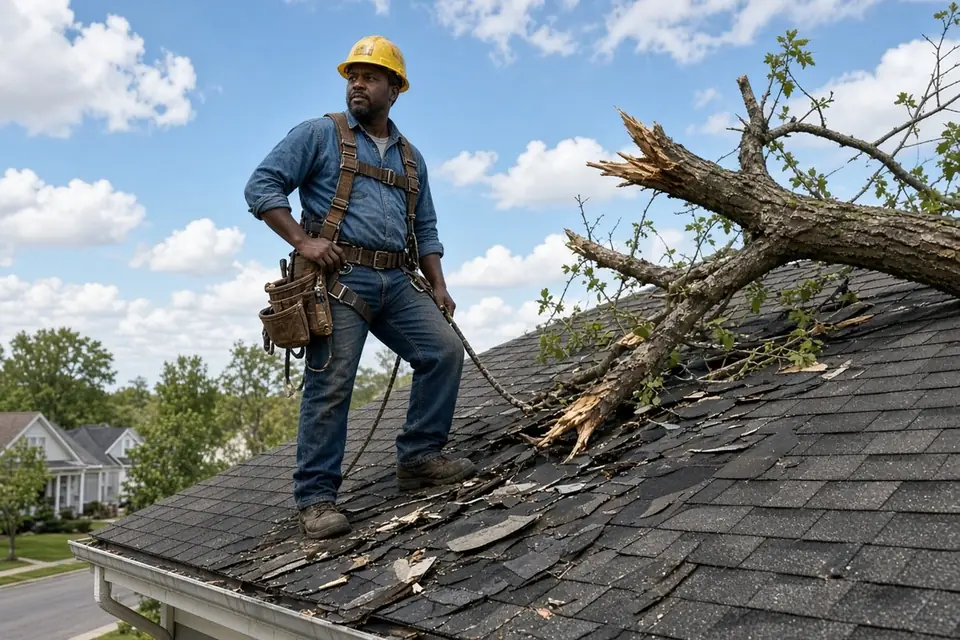
Impact can puncture the deck or crack rafters. The tree usually needs to come off before the opening can be covered properly.
Large hail can split shingles, crack tiles and dent metal. Cover active leak points first, then plan the hail damage roof repair.
If the leak started with storm damage, covering the roof stops more water. Wet ceilings, insulation and floors are a separate water damage need.
A properly installed tarp covers well past the damaged area, is fastened through battens rather than loose weights, and sheds water down the slope. It can still loosen in wind and wear down in sun. Plan the permanent roof repair with a roofing provider and check the tarp after every storm. Report downed power lines to your electric utility or 911, and stay well away from them.
Stops more water from entering. The provider decides tarp size, fastening and whether the decking is safe to work on.
Ask what the installation includes, how long it is meant to last, and what it costs before you approve it.
A roofing provider repairs the decking, underlayment, flashing and covering. Wet drywall, insulation and flooring may need structural drying. Say on the call if you need both.
RepairNowUSA is a referral and connection platform. Provider availability and response times vary by location, weather and demand, and are not guaranteed.
Call 833-877-1717Straight answers for owners, landlords, managers and facilities teams after storm damage.
It is safer not to. Wet, steep or storm-damaged roofs cause serious falls, and damaged decking can give way. A provider with fall protection, the right fasteners and enough tarp to cover past the ridge is the safer option. From the ground, you can protect the inside: move belongings, catch drips and photograph the damage.
It depends on your ZIP code, the weather, and how many properties were hit. After a widespread storm, demand can be high. Call 833-877-1717 with the ZIP code and describe the opening; RepairNowUSA will look for a participating provider. Arrival time is not guaranteed.
Yes. You can call 833-877-1717 at any time. Whether an independent provider can come out right away depends on the time, the weather, safe access and provider capacity in your area.
No. A tarp is temporary protection that limits water entry until the roof can be repaired. A roofing provider then inspects the decking, underlayment, flashing and covering and recommends the permanent repair.
Only as long as it takes to arrange the permanent repair. Sun, wind and rain wear tarps down. Ask the provider how long their installation is meant to last and check it after every storm.
RepairNowUSA cannot answer for your policy. Many property policies expect owners to take reasonable steps to prevent more damage after a loss, so keep photos, invoices and dates, and contact your insurer or agent about coverage.
After some federally declared disasters, the U.S. Army Corps of Engineers runs Operation Blue Roof in eligible areas. Availability and eligibility are set by that program, not by RepairNowUSA. Check FEMA or local emergency management announcements.
Stay out of rooms under the impact area and away from any downed power lines. A tree on the structure usually needs tree removal before a roof can be tarped. Tell RepairNowUSA about the tree when you call.
These public sources provide general safety context. They do not replace an on-site evaluation, and RepairNowUSA does not perform the work.