
Wait for the all-clear
Do not go back in until the fire department says the building is safe. Fire weakens floors, roofs and stairs, and hidden hot spots can flare up.
After a fire, the building needs securing, water removal from firefighting, soot and smoke cleanup, odor removal and rebuilding. Once authorities allow entry, call 833-877-1717. RepairNowUSA connects the request. An independent provider does the work.
Openings: board-up. Smoke: smoke damage. Soot: soot cleanup.
RepairNowUSA editorial review · Last substantively reviewed October 14, 2026 · Review standards
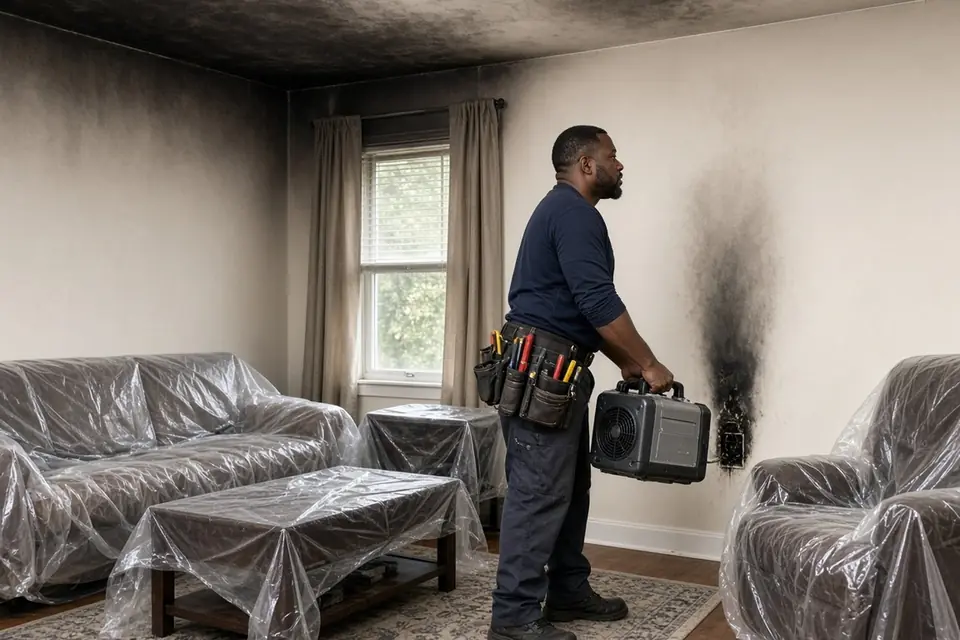
Do not go back in until the fire department says the building is safe. Fire weakens floors, roofs and stairs, and hidden hot spots can flare up.
Broken windows, doors and roof openings let in rain and intruders. Ask for emergency board-up or roof tarping as soon as the scene is released.
Report the loss, ask what they need and keep every receipt. Photograph each room before anything is moved or thrown away.
Do not re-enter a fire-damaged building until the fire department says it is safe. Have utilities checked before restoring power or gas. Soot and smoke residue can irritate lungs; wear protection and keep children and pets away.
Hoses and sprinklers can leave far more water than the fire damage itself. Wet floors, walls and ceilings need water extraction and drying before mold can start.
Smoke travels through open doors, wall cavities and ductwork, so rooms far from the fire can still need smoke damage cleanup and soot cleanup.
Smoke odor soaks into drywall, insulation, carpet and fabric. Surface cleaning alone rarely removes it. See fire odor removal.
Burned framing, roof decking and subfloor are usually removed and rebuilt. Wiring and gas lines near the fire need inspection by licensed trades before use.
Small kitchen fires may take days. Larger losses with structural damage can take months, and the insurer’s review often sets the pace. Ask the provider for a written scope that separates emergency work from rebuild work.
RepairNowUSA is a referral and connection service. Provider availability and response times vary by location, time and demand, and are not guaranteed. Before you approve work, ask what was found, the price, the timing and what is not included.
Call 833-877-1717As soon as the fire department releases the property. Soot residue can discolor surfaces and become harder to clean over time, and firefighting water starts the clock on mold.
Only if the fire department says it is safe and the utilities have been checked. Smoke residue can irritate the lungs, so people with asthma, young children and older adults may need to stay elsewhere until cleanup is done.
Food exposed to heat, smoke, soot or firefighting water is generally unsafe, even in sealed containers or the refrigerator. When in doubt, throw it out.
RepairNowUSA cannot answer for your policy. Most homeowner and commercial property policies address fire, but coverage, deductibles and limits vary. Contact your insurer early, document everything and keep receipts.
Some restoration providers handle all of it. Others hand rebuild work to a general contractor. Ask the provider what they do themselves and what they subcontract.
Yes. You can call 833-877-1717 at any time, including nights, weekends and holidays. Whether an independent provider can come out right away depends on your ZIP code, the time and provider capacity, so availability is not guaranteed.
These public sources give general safety context. They do not replace an on-site evaluation, and RepairNowUSA does not perform the work.